







The World Robotic Center (WRC) is an international platform envisioned as a global leadership hub for the development, standardization, and direction of the world’s robotics civilization. The organization was established on September 22, 2017, as a strategic initiative to create a global collaborative axis in the fields of robotics and artificial intelligence. WRC exists not merely as an organization, but as a new pivot in the 21st-century technological geopolitical architecture.
Amid the global transformation towards the era of artificial intelligence and automation, the world requires a collaborative space capable of bridging the interests of academia, industry, and governments across nations. WRC assumes this strategic role by building an inclusive, ethical, and human-centered global robotics ecosystem.
As the Global Robotics Standards Center, WRC promotes the harmonization of international standards in robotics and AI, encompassing safety, system interoperability, technological ethics, cybersecurity, and global competency certification. These standards form the foundation for stability and balance in technological development, ensuring that innovation progresses not aimlessly, but guided by principles of humanity and sustainability.
Serving as a strategic link between academia, industry, and government, WRC fosters technological diplomacy by connecting research centers, industry stakeholders, and policymakers from around the world. Through cross-border collaboration, WRC accelerates technology transfer, global talent development, and the alignment of public policies in robotics and AI. In this context, WRC becomes a dialogue space for civilizations, where technology is not a tool for domination but a means of collective progress.
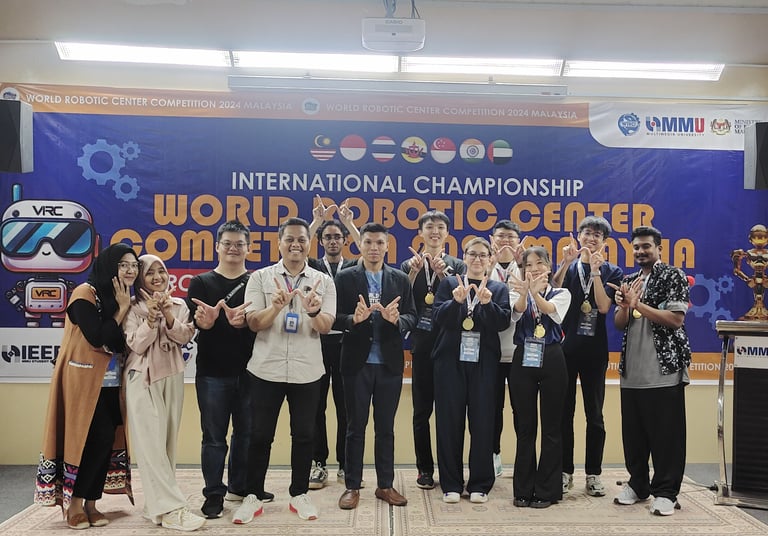
As the organizer of the World Robotics Summit and World Robotics Competition, WRC provides an international stage for innovators, scientists, industry leaders, and the world’s youth to shape the future robotics agenda. These forums are not only platforms for technological competition but also venues for global technological diplomacy, influencing the direction of the world robotics industry.
With a vision of building a fair and collaborative technological order, the World Robotic Center positions itself as a strategic hub in the global arena — making robotics an instrument for the advancement of civilization, peace, and human welfare.
VISSION
To become a global leadership center in the standardization, collaboration, and development of robotics and artificial intelligence in order to build a just, secure, and sustainable technological civilization for humanity.
MISSION
Establish Global Standards for Robotics and AI:
To develop and promote the harmonization of international standards in robotics and artificial intelligence, covering safety, interoperability, ethics, security, and global competency certification.
Strengthen International Technology Diplomacy and Collaboration:
To serve as a strategic bridge between academia, industry, and governments across nations in accelerating research, technology transfer, and the alignment of global policies in robotics.
Develop Global Talent and Innovation Ecosystems:
To advance high-quality human capital through education, training, and international certification, while supporting the growth of global robotics startups and innovation.
Organize World Robotics Forums and Competitions:
To host the World Robotics Summit and the World Robotics Competition as global platforms for idea exchange, cutting-edge technology demonstrations, and shaping the future agenda of world robotics.
Uphold Ethical and Technological Security Principles:
To ensure that the development of robotics and artificial intelligence aligns with humanitarian values, peace, and global sustainability.