TienKung Ultra Delivers an Impressive Performance at the Robot Marathon in Beijing
Admin
4/21/20262 min read
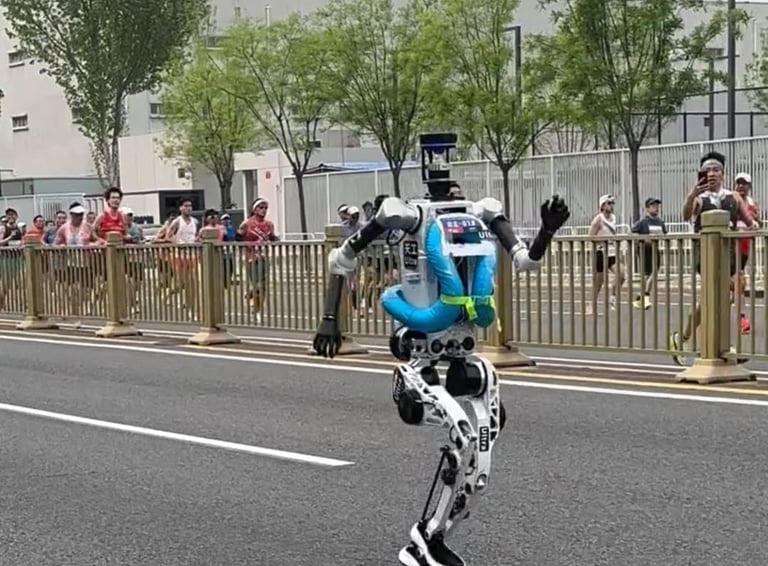
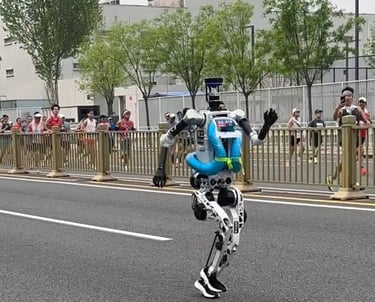
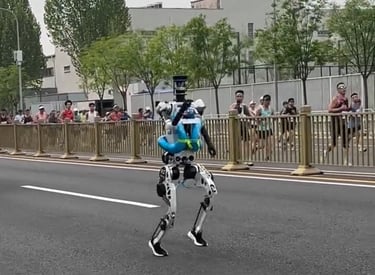
The robot marathon held in Beijing, China, captured global attention by showcasing the remarkable performance of the humanoid robot TienKung Ultra. Although it did not secure first place, the robot successfully drew the interest of both the public and experts due to its movement, which is considered the closest to human motion.
In the competition, TienKung Ultra completed the full 21.0975-kilometer distance in 1 hour and 15 minutes. Even more impressively, the entire run was carried out fully autonomously without any human intervention, highlighting significant advancements in Embodied AI and Physical AI technologies.
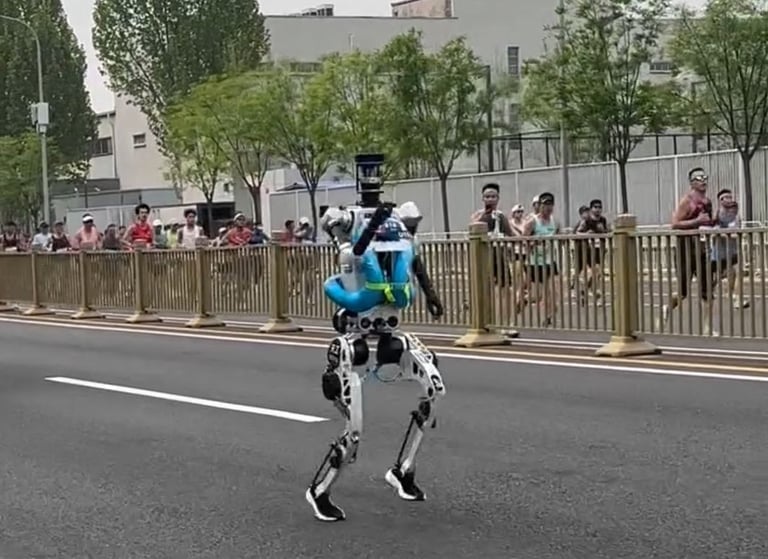
From a technical perspective, the robot demonstrated superior movement quality compared to other participants. With its clean gait, high stability, and natural running style, TienKung Ultra showcased a biomechanical approach that increasingly resembles human motion. For these strengths, it was awarded the “Best Design” title—an achievement considered more meaningful than a podium finish in terms of technological innovation.
TienKung Ultra is not a robot built solely for marathon competitions. It is a general-purpose humanoid designed for real-world applications. This was further proven a day before the race, when it won the Robot Warrior Challenge, a competition that tests robots in obstacle scenarios modeled after real-life rescue operations and hazardous environments—also performed fully autonomously
Interestingly, TienKung Ultra is developed within an open ecosystem framework. Leading global universities such as Peking University, Fudan University, Huazhong University of Science and Technology (HUST), Beijing Institute of Technology (BIT), Beihang University, HKUST (Guangzhou), and Technical University of Munich (TUM) are all building different solutions on the same platform.
This approach reflects the emergence of a collaborative robotics ecosystem, where hardware and core systems are shared, while innovation is developed diversely by multiple institutions. Such a model is believed to accelerate technological progress and establish new standards in the global robotics industry.
More than just a race about speed, this event demonstrates that the future of robotics is no longer defined solely by competitive performance, but by the ability of autonomous systems to operate effectively in complex real-world environments.
With these achievements, TienKung Ultra represents the future direction of humanoid robotics—not merely as a competition machine, but as a technological solution ready for real-world implementation.